
The Parent’s Guide to Planning a Family Safari in Africa
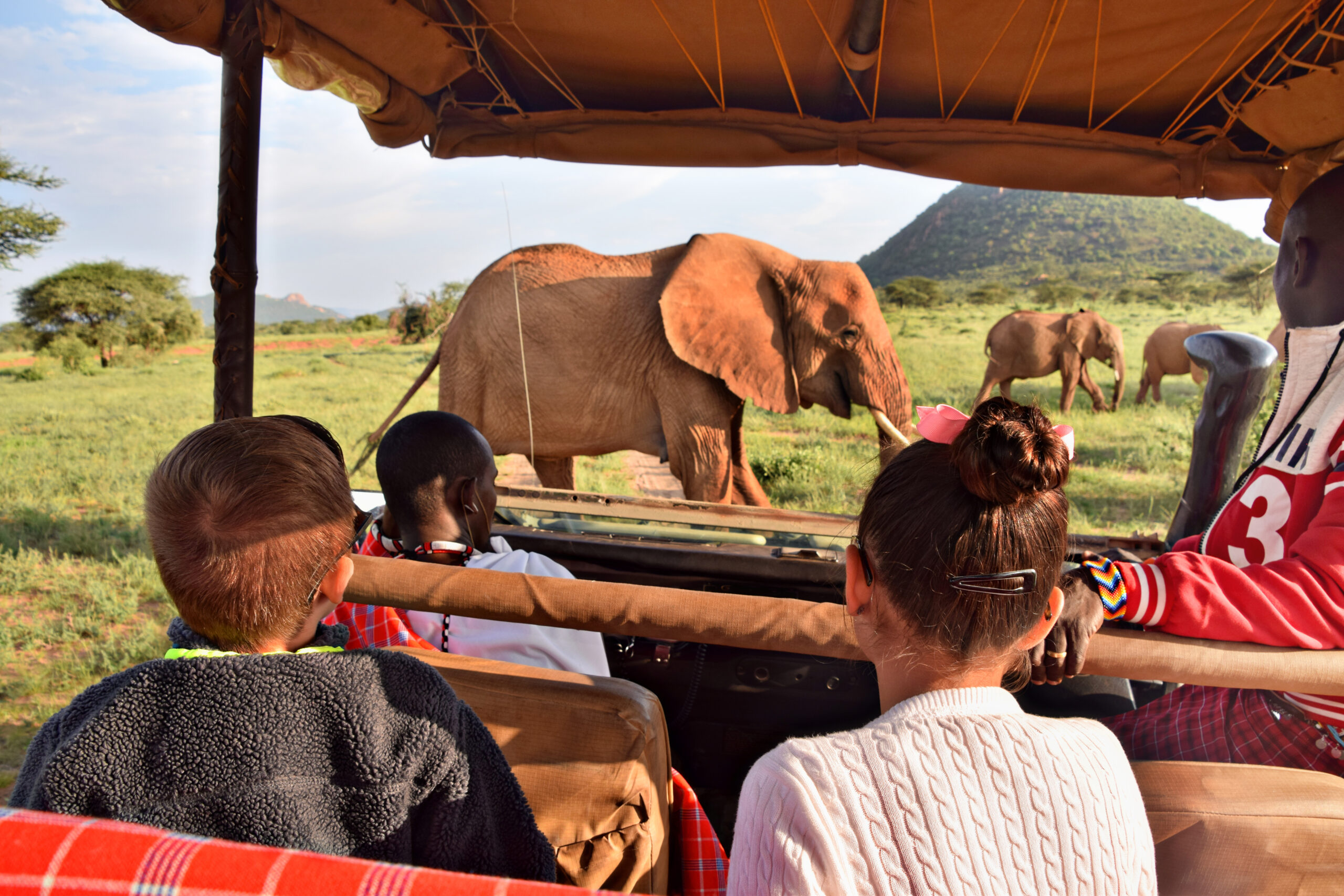
People will tell you to wait until the kids are older. That safari is wasted on children, that they won’t appreciate it, that you will spend the whole trip managing tantrums instead of watching wildlife. We disagree. Some of our most memorable family groups have been the ones with the youngest children. A family safari is not as complicated as people make it out to be either. Yes, there might be a morning someone doesn’t want to get up for. You may need to pack more snacks than you think. But the trip you come home from will be one of the best your family has ever taken.
Before You Go
1. Pick the right lodge
Not all safari lodges are kid-friendly and age policies vary widely. Some have minimum age requirements for game drives, others have dedicated family programmes with activities designed specifically for kids. Always check before you book. Under 6, you will want somewhere with a pool, activities for when little ones can’t join drives, and ideally a malaria-free destination. Ages 7 to 12 is the sweet spot — children this age are curious enough to ask questions and old enough to sit through a full drive. Teenagers often connect with safari in unexpected ways, engaging more deeply without screens while also enjoying more adventurous activities like walking safaris and white-water rafting.
2. Choose your park wisely
Game density matters more than you might think when travelling with little ones. A park where animals are plentiful means shorter distances between sightings and fewer long, restless stretches in the vehicle. For families with young children, this can make or break the experience. Malaria is equally worth factoring into your park choice. For families with babies and toddlers, malaria-free destinations are strongly preferable as anti-malarial medication is not suitable for very young children. South Africa and parts of Namibia offer excellent malaria-free safari options that don’t compromise on wildlife. If you are set on a destination that carries a malaria risk, consult a travel clinic well in advance to get advice on the right treatment for your children.

Book your malaria-free family safari

3. Add variety
Game drives are the highlight of any safari, but too many back-to-back can wear even the most enthusiastic child down. Mix in a bush walk, a cultural village visit, or a boat cruise, a horseback safari, or a hot air balloon ride to break the rhythm. Different experiences keep curiosity alive, and you might find that the activity you least expected becomes your child’s favourite memory of the whole trip.
4. Manage expectations
Before you leave, take some time to prepare your kids for what safari actually looks like — the early mornings, the patience required, the fact that some drives are quieter than others. If your children have had little exposure to nature or wildlife, it is worth sparking that curiosity before you go. A wildlife documentary, a visit to a nature reserve, or simply downloading an animal identification app can make a real difference to how engaged they are when they arrive. Get them to put together a personal bucket list of animals they want to see or things they want to do. The more invested they are before you leave, the more they get out of it. That said, if your child has one animal they absolutely must see, have an honest conversation before the drive. Wildlife does not perform on demand, and a child who was promised a lion sighting and did not get one can derail an otherwise brilliant morning. Frame it as a treasure hunt rather than a guarantee.
On the game drive
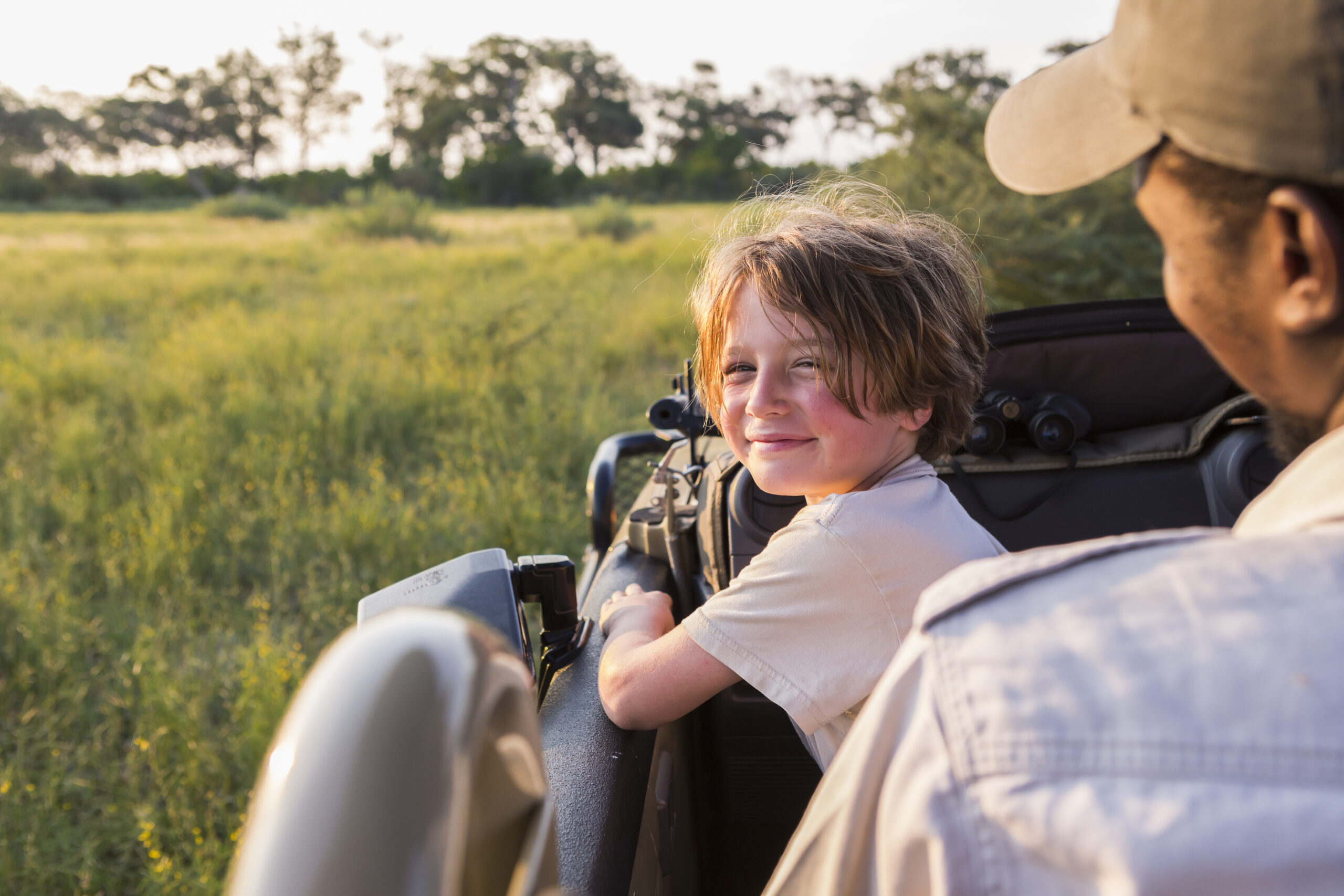
5. Give them a role
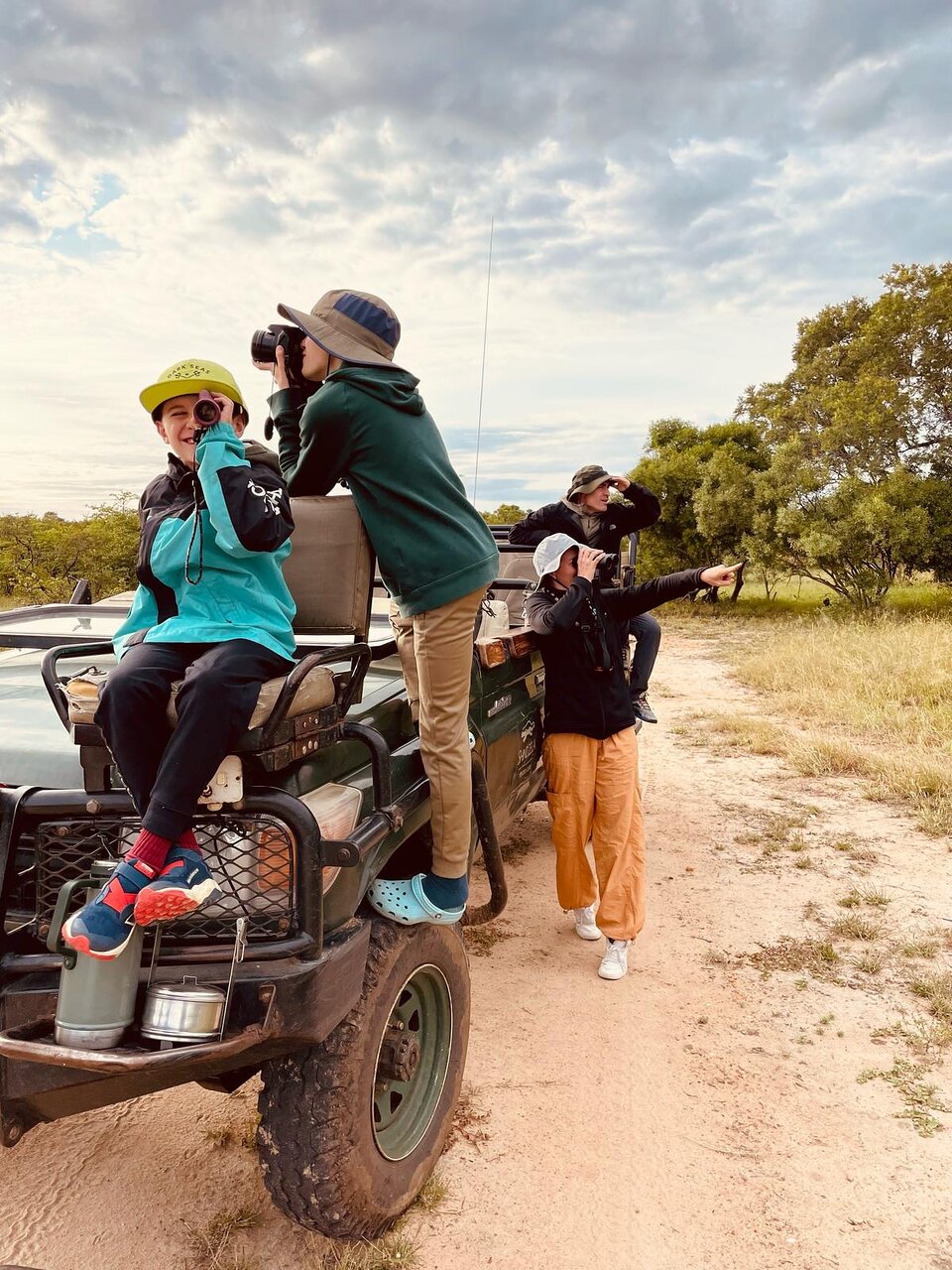
Children engage far more deeply when they feel responsible for something. Make one the official spotter, another the photographer, another the animal counter. Suddenly they are no longer just passengers, but part of the team. You will be amazed at how long this keeps them focused.
6. Snacks are your secret weapon
Pack more than you think you need. Hunger and boredom arrive at exactly the same time on a game drive, and a well-timed snack can reset the mood entirely. While you’re at it, throw in hats, sunglasses, sunscreen, and binoculars — you will be glad you did.
7. Keep their hands busy between sightings
A small wildlife journal is one of the best investments you can make. Young children can draw animals they’ve seen, stick in feathers and leaves, write down facts the guide shared. It keeps restless hands occupied and becomes a keepsake that outlasts any souvenir you could buy in a gift shop.
8. Give them a camera
A disposable camera or an old phone can turn a passive child into an active participant. They stop being observers and become documentarians. You may end up with 200 blurry photographs of the sky and one absolute masterpiece, and they will talk about both for years.
At the lodge
9. Embrace the midday break
Midday at the lodge, when the heat peaks and animals retreat into shade, is pool time. It resets everyone’s energy, gives the kids something to look forward to between drives, and means you will have a far more enthusiastic family by late afternoon.
10. Let them lead the debrief
At the end of every drive, ask each child what their favourite moment was. Let them tell the story in their own words and in as much detail as they want. It cements the memory and gives them ownership of the experience.
11. Make the most of the lodge experience
A bush breakfast, a boma dinner, a conversation with a member of staff who grew up in the bush — these moments matter as much as any game drive. Encourage your children to engage, ask questions, and be curious about the people and the place around them.
12. Embrace the early nights
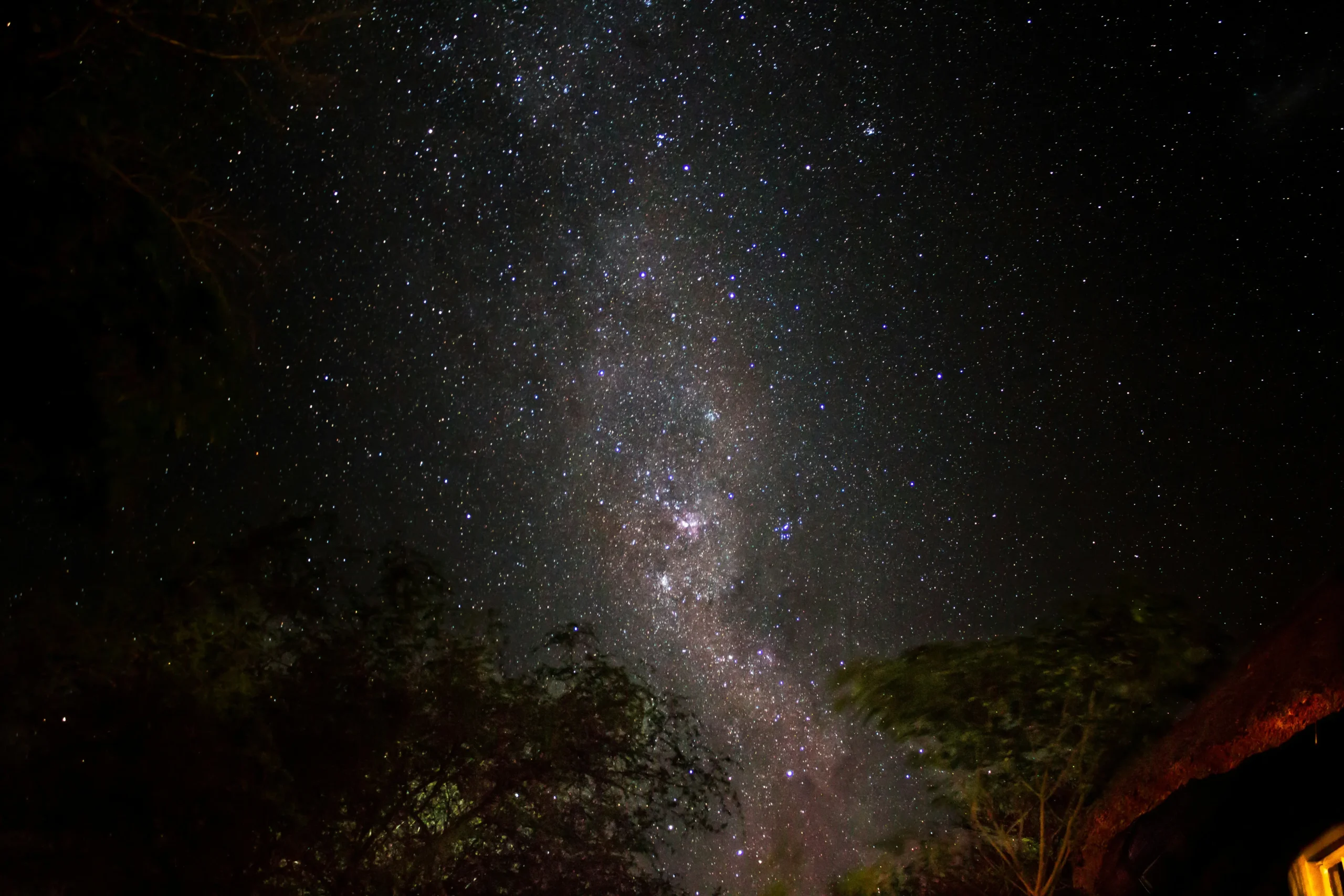
Safari rhythms mean early mornings, and early mornings mean early nights. Lean into it. A well-rested child is a completely different safari companion to a tired one. Before the kids go to sleep, take a few minutes to step outside and look up. Away from city lights, the African night sky is extraordinary. Vast, clear and filled with more stars than you can count.
Practical Tips
13. Book a private vehicle if possible
On a shared game drive vehicle, there is an unspoken pressure to keep children quiet and contained. On a private vehicle, none of that exists. You stop for as long as you want, reverse for a second look, ask every question, and let the experience unfold entirely at your family’s pace. For families with young children, it is worth every extra dollar.
14. Pack smart
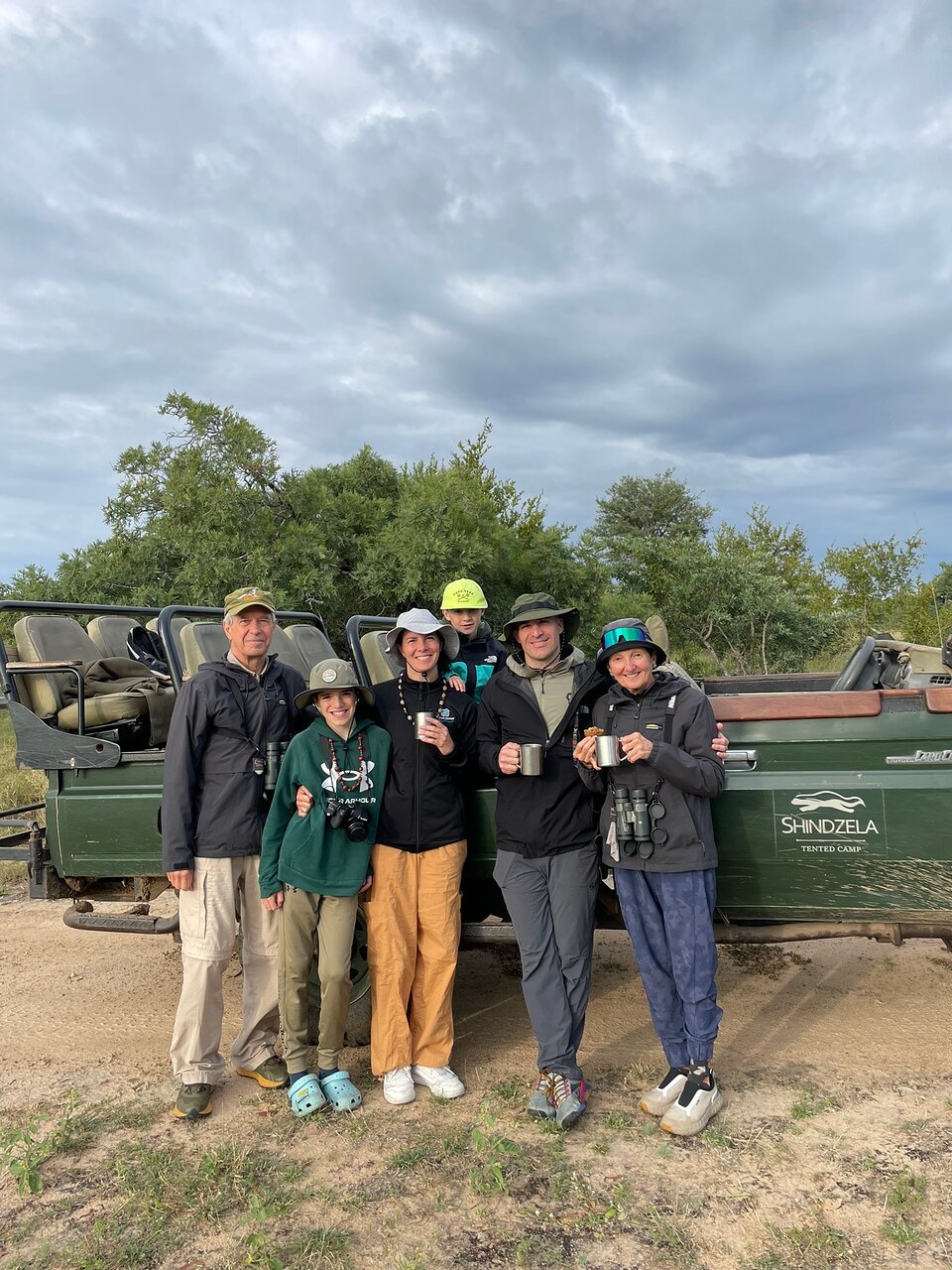
Dress the kids in neutrals — khaki, olive, or beige. Bright colours can disturb wildlife and attract insects. Beyond that, here are a few essentials we suggest families bring: a sunscreen, a good insect repellent, a small first aid kit with any medications your children take regularly, a reusable water bottle per person, and a portable charger for cameras and phones. If your children have comfort items like a favourite toy or a familiar blanket, add them to the bag. The bush is extraordinary, but it is also unfamiliar, and small comforts make a real difference on the first night.
15. Don’t over-schedule
One or two activities per day is plenty for young children. The temptation is to pack in as much as possible, but a tired child and a full itinerary is a recipe for meltdowns. Leave room for rest. In practice, that might look like a morning game drive, a leisurely lunch at the lodge, an afternoon swim, and a sunset cruise.
16. Talk to your guide beforehand
Let your guide know the ages of your children before the drive begins. A good guide will pitch their commentary at the right level, actively involve the kids, and build the kind of engagement that keeps young minds locked in for hours.
Let us plan your family safari
The right lodge changes everything. It is the difference between a trip where your children are tolerated and one where they are celebrated. At Kamaroutes, we have spent time on the ground scouting accommodations that are truly family-friendly: places where children are genuinely welcomed, where the programmes are built around them, and where the experience is designed to make them feel like explorers rather than passengers. Get in touch and let us help you plan a safari your whole family will never forget.


